
How to Search Chesterfield County Probate Records
Probate records sit with the Circuit Court Clerk. The clerk's land records index includes wills from 1994 to current, and you can search that index online for free. The official will and estate files can be reviewed in the Record Room on the ground floor of the main Courts Building, or you can request copies from the clerk. Probate and estate matters themselves, such as recording a will or qualifying a personal representative, are handled by appointment through the Probate Division.
Virginia's self-help site explains that Circuit Court handles probate and links to probate guides and forms.
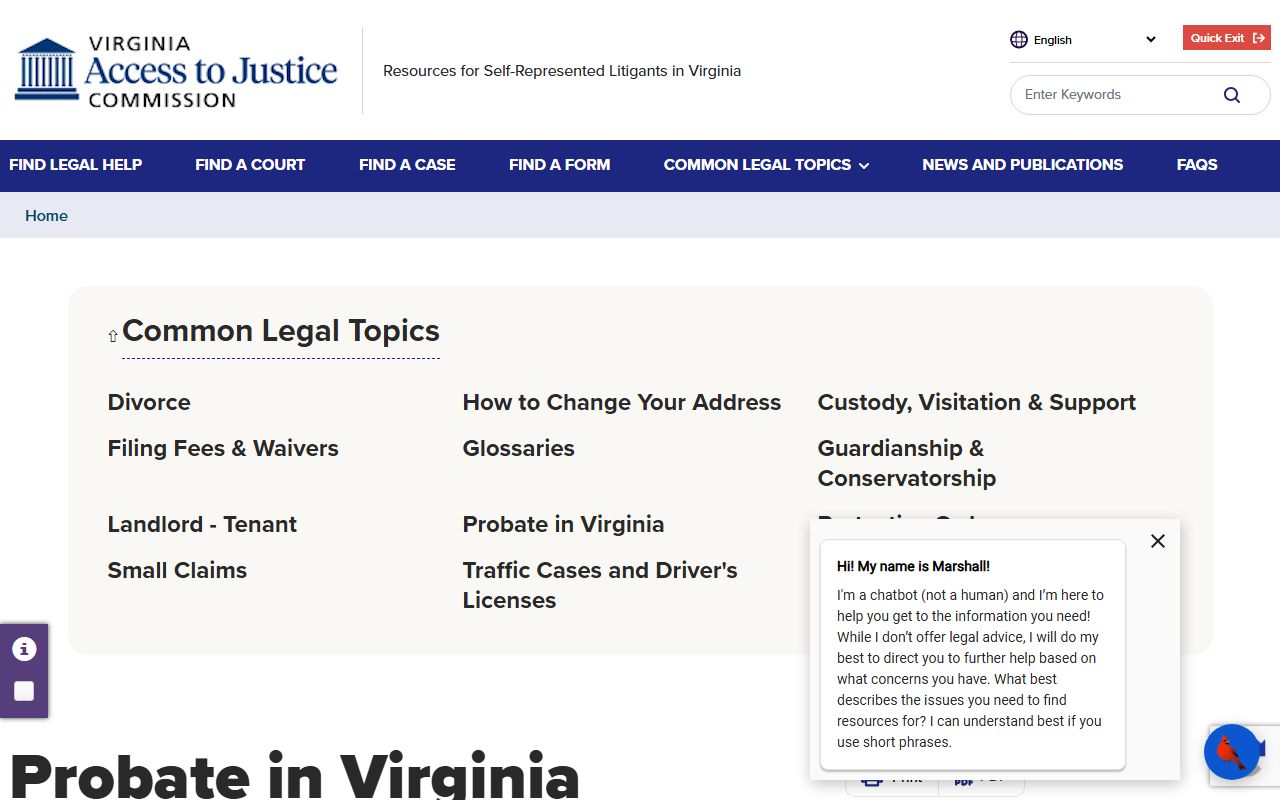
The Virginia probate self-help page describes probate as the court process to transfer a deceased person's property to those entitled to receive it.
The online wills index is a finding aid, not the full document. It tells you whether a will from 1994 forward is on record and where to look. To read the actual will or estate file, you use the Record Room or order a copy from the clerk. For older estates before 1994, the index may not be online, so a call or a visit to the Record Room is the better path. The clerk keeps permanent records dating back to 1749, so even very old estate matters can often be located in person.
Probate in Chesterfield Circuit Court
Probate is more than filing a will. The Circuit Court Clerk determines whether a will is valid, records it as appropriate, and qualifies the right person or people to act as personal representatives who manage the estate. That is true whether or not a valid will exists. If there is no will, the estate is handled under Virginia's intestacy rules, and the court still qualifies an administrator.
The clerk's probate role is part of a much larger set of duties. The same Circuit Court Clerk records land records, issues marriage licenses, and qualifies fiduciaries. For the full scope of the office, see the Clerk of the Circuit Court page.
Where a person lived at death decides which court handles probate. A Chesterfield resident's estate goes to the Chesterfield Circuit Court Clerk, even if the person owned property in another county or state. That residence rule keeps a single court in charge of the estate and prevents two courts from probating the same will at the same time.
Why Record a Will in Chesterfield
There are real reasons to probate or record a will. Assets may need to be managed by a personal representative. The person who died may have owned real estate in Chesterfield or elsewhere, alone or jointly. And recording the will makes it a permanent public record, which serves as a formal link for family, beneficiaries, and creditors for years to come.
To record a will or qualify an executor or administrator, you contact the Circuit Court Clerk in the jurisdiction where the person lived at death. For a Chesterfield resident, that is the Chesterfield Circuit Court Clerk's Probate Division. The work is done by appointment, not at a walk-up counter.
The Probate Appointment Process
Probate in Chesterfield runs on a scheduled appointment. The clerk uses a probate and estate administration information checklist to guide what you bring. Coming prepared keeps the appointment from stalling. The steps below outline the path from start to estate administration.
- Determine the decedent's legal residence at death.
- Contact the Chesterfield Circuit Court Clerk Probate Division if Chesterfield was the residence.
- Schedule the probate or estate appointment.
- Bring the original will if one exists, a certified death certificate, asset estimates, and heir or beneficiary information.
- The clerk determines whether the will can be recorded and whether fiduciary qualification is needed.
- The executor or administrator qualifies, posts bond or surety if required, and receives certificates of qualification.
- The fiduciary files an inventory and accountings with the Commissioner of Accounts as required.
- Estate administration proceeds through creditor notice, debt payment, and distribution.
Fiduciary Qualification and the Commissioner of Accounts
Qualifying as a personal representative is the start, not the end. The executor or administrator takes on legal duties and must understand and carry them out. Chesterfield points people to the Circuit Court Clerk, the Commissioner of Accounts, and possibly an attorney or accountant. The Commissioner of Accounts is an attorney commissioned by the Circuit Court judges to oversee fiduciaries and review and approve inventories and accountings.
The contact cards below give the offices most estates will need.
Probate Division
Chesterfield Circuit Court Clerk
9500 Courthouse Road
804-706-7680
cccprobate@chesterfield.gov
Commissioner of Accounts
Bryan K. Selz, Esq.
Oversees fiduciaries
804-796-4891
Fax 804-796-4892
Circuit Court Clerk
9500 Courthouse Road, 2nd Floor
Chesterfield, VA 23832
804-748-1241
Mon-Fri 8 a.m.-4 p.m.
The Commissioner's review is why estate work continues after the clerk appointment. Inventories and accountings still go through fiduciary oversight before an estate closes.
A personal representative carries weight. After qualifying, the executor or administrator gathers the estate's assets, gives notice to creditors, pays valid debts and taxes, and distributes what remains to the heirs or beneficiaries. The inventory lists what the estate holds, and the accountings show what came in and went out. Missing a deadline or a step can hold up the estate, which is why the county points people to the clerk, the Commissioner, and, when needed, an attorney or accountant.
Common Probate Terms
Probate has its own vocabulary, and the words matter when you read a file or talk to the clerk. The short glossary below covers the terms that come up most.
- Testator
- The person who made the will.
- Executor
- The person named in a will to manage the estate.
- Administrator
- The person the court appoints to manage an estate when there is no will.
- Intestate
- Dying without a valid will, so state law decides who inherits.
- Fiduciary
- An executor, administrator, guardian, or conservator with legal duties to others.
- Conservator
- A person appointed to manage another adult's money or property.
Probate Records Fees and Copies
Copy fees for probate records follow the clerk's standard schedule. Plain copies are $0.50 per page, and certification adds $2 per document. A recorded will and many estate filings can be copied through that process. Probate itself can carry other charges, such as a probate tax and qualification costs, which depend on the estate. Those are best confirmed at the appointment, since they vary by estate value.
| Item | Amount |
|---|---|
| Plain copy per page | $0.50 |
| Certification per document | $2.00 |
| Probate tax and qualification costs | Vary by estate; confirm at appointment |
Note: Do not assume a fixed probate cost; the clerk gives the exact figures based on the estate at your appointment.
Is a recorded will public? Yes. Once a will is probated and recorded, it becomes a permanent public record that anyone can request a copy of through the clerk. That is one reason the county lists recording a will as a way to leave a clear, lasting link for family, heirs, and creditors. A will that is never recorded does not get that protection.
Probate Is Not Bankruptcy
People sometimes confuse settling an estate with bankruptcy. They are different. Probate transfers a deceased person's property and pays valid debts from the estate. Bankruptcy is a separate federal process for a living person or business that cannot pay debts. They run in different courts under different law.
Bankruptcy for the Chesterfield area is handled by the federal court, not the Circuit Court Clerk.
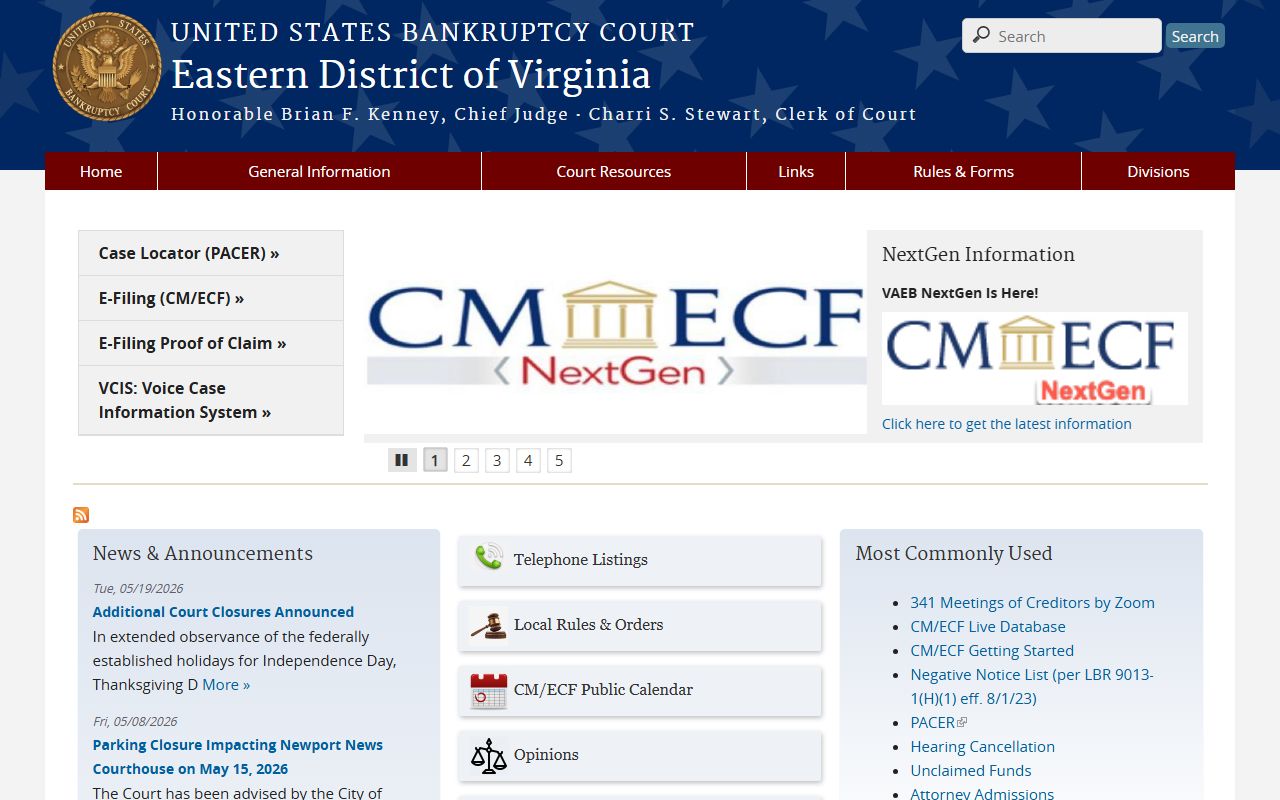
The U.S. Bankruptcy Court for the Eastern District of Virginia handles federal bankruptcy, while probate and estate matters stay with the Circuit Court Clerk.