
How to File a Chesterfield Public Records Request
The first step is to figure out who holds the record. Court, land, marriage, judgment, and will records go to the Circuit Court Clerk through its copy process. County department emails, police administrative records, and other executive-branch records go through a Virginia Freedom of Information Act request to the right county office. Sending a FOIA letter for a court record is a common mistake, since those records are handled by the clerk instead. Use these steps.
- Identify the record and the office that keeps it.
- For a court, land, marriage, or will record, call the Circuit Court Clerk division for a copy quote.
- For a county agency or police administrative record, send a FOIA request to that office.
- Give clear details: names, dates, document type, and a case or instrument number if known.
- Pay the quoted copy fee or the FOIA cost, then receive the records or a written response.
Clerk copy requests can be made by phone, by mail, or in person after you confirm the fee. The general clerk line is 804-748-1241, with civil copies at 804-717-6981, criminal at 804-717-6980, and land records at 804-717-6982. Calling the matching division first saves a second trip, because staff can quote the exact fee before you send payment.
Court Records vs FOIA Requests
Virginia draws a clear line between the two systems. The state Freedom of Information Act sets a policy of open government records, with narrow exemptions. But the Chesterfield Circuit Clerk notes that records already available to the public through the clerk are exempt from FOIA under Code of Virginia § 2.2-3703(A)(7). That covers unsealed land records, court files, judgments, marriage licenses, and wills. So those go through the clerk's record process, not a FOIA letter.
The state's open-records law sits in one chapter of the Code of Virginia.
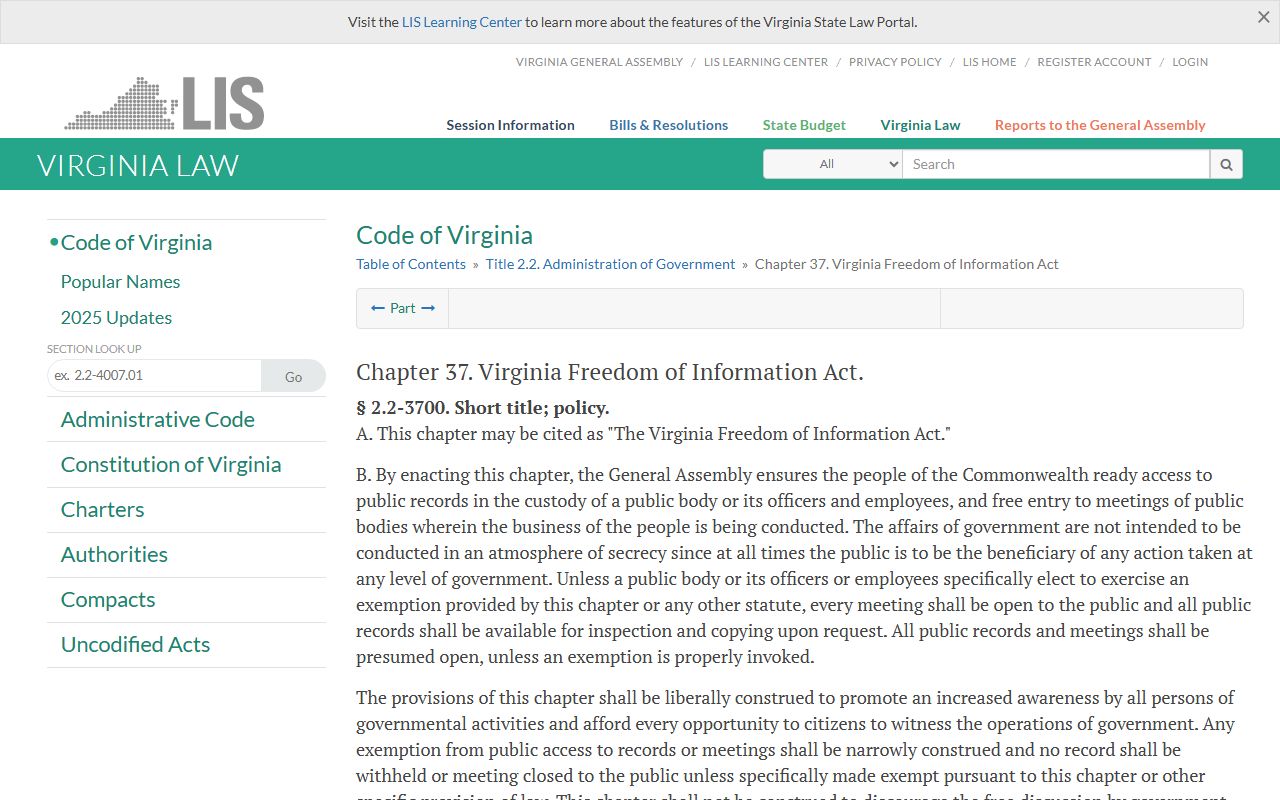
The Virginia Freedom of Information Act governs county agency and police administrative records, while court of record access runs under Virginia Code § 17.1-208.
A few examples make the split easy to apply. A certified divorce decree, a deed, a recorded will, or a money judgment goes to the Circuit Court Clerk. A county department's emails, a budget document, or a police administrative record goes through a FOIA request to the right county office. The court statute, § 17.1-208, says nonconfidential court records are open for inspection and copying and that a compliant request should be answered within a reasonable period, no later than 30 days. That 30-day outer limit is not the same as instant online access, since online systems show limited case data while the clerk holds the official file.
What the Circuit Court Clerk Maintains
The Circuit Court Clerk keeps far more than lawsuit files. The office records and maintains a wide range of public records that people request often. Knowing the full list helps you ask the right division. Records the clerk maintains include:
- Land records - deeds from 1967 to current, plats, and judgments.
- Wills and estates - the wills index from 1994 to current and recorded estate files.
- Marriage licenses - issued and recorded by the clerk.
- Court case files - Circuit Court civil and criminal records from 1990 to current.
- Business name filings - assumed or fictitious name records.
- Other records - concealed handgun permits and notary commissions.
Free access to land-record and wills indexes is online. Secure remote access to the actual land-record images requires registration with the clerk. The official records can also be reviewed in the Record Room. This breadth surprises people who think a court clerk only handles lawsuits. In Chesterfield, the same office is the custodian for deeds, judgments, wills, marriage licenses, business-name filings, and more, which is why so many public-record requests start at the clerk's counter rather than with a FOIA letter.
Clerk Copy Request Fields
A clerk copy request asks for a set of details so staff can find the record and quote a fee. Calling the right division first is the fastest path, since the page count sets the price. The table lists what to have ready.
| Field Label | Type | Required | Notes / Format |
|---|---|---|---|
| Requester contact phone | Phone | Yes for a quote | Call the right division first to confirm page count and fee. |
| Record subject name | Text | Yes | Name connected to the document or case. |
| Document type | Text | Yes | Court order, deed, judgment, marriage license, plat, or will. |
| Date | Date | Strongly needed | Date of the document, marriage, judgment, or filing if known. |
| Case or instrument number | Text | Optional | Use if known to help locate the record. |
| Copy type | Choice | Yes | Plain copy or certified copy. |
| Payment | Cash / check / money order / card | Yes | Mail accepts check or money order; phone accepts card with a fee. |
Note: Never mail cash for a court debt, and include a self-addressed stamped envelope when you want a copy returned by mail.
Public Records Fees and Certification
Clerk copy fees are set and simple. Plain copies are $0.50 per page. Certification adds $2 per document. A certified marriage-license copy is $2.50. Phone requests paid by credit card add a $2 processing fee plus postage. FOIA fees work differently. Under FOIA, a county office must tie charges to the actual cost of responding and should be able to explain how a fee was figured. The table shows the common clerk fees.
| Item | Amount |
|---|---|
| Plain copy per page | $0.50 |
| Certification per document | $2.00 |
| Certified marriage-license copy | $2.50 |
| Credit-card processing fee | $2.00 plus postage |
For the clerk's full request process, see the Clerk of the Circuit Court page, and for case files specifically, the court records page.
FOIA Response Rules and Timelines
A FOIA request to a county office follows set procedure under Code of Virginia § 2.2-3704. The public body must respond within the statutory time window. It can provide the records, withhold them with a statutory citation, release a redacted version with a citation for the withheld parts, or invoke a permitted extension. Fees must be based on the actual cost of the work, not an invented price. Disputes can be pursued through statutory remedies, and the Virginia Freedom of Information Advisory Council offers guidance.
Police records add their own layer. Basic criminal incident information is treated differently from active investigative files under Code of Virginia § 2.2-3706. Some incident or arrest information may be released, while open investigations may be withheld. The arrest records page covers that distinction in more detail.
Court debt has its own collection path that touches public records. Chesterfield says unpaid criminal court costs can become a judgment lien against real estate, accrue interest after 181 days, and be referred to the Virginia Department of Taxation with a 17 percent collection fee. That is why a person's court-cost balance can show up tied to property records, not just the original case file.
Confidential and Restricted Records
Not every record is open, and the limits are set by law, not by the office. Juvenile records are protected on two fronts. Juvenile court records are confidential under Code of Virginia § 16.1-305, and juvenile law-enforcement records are protected separately under § 16.1-301. The two statutes mean a minor's case and a minor's police contact are both shielded.
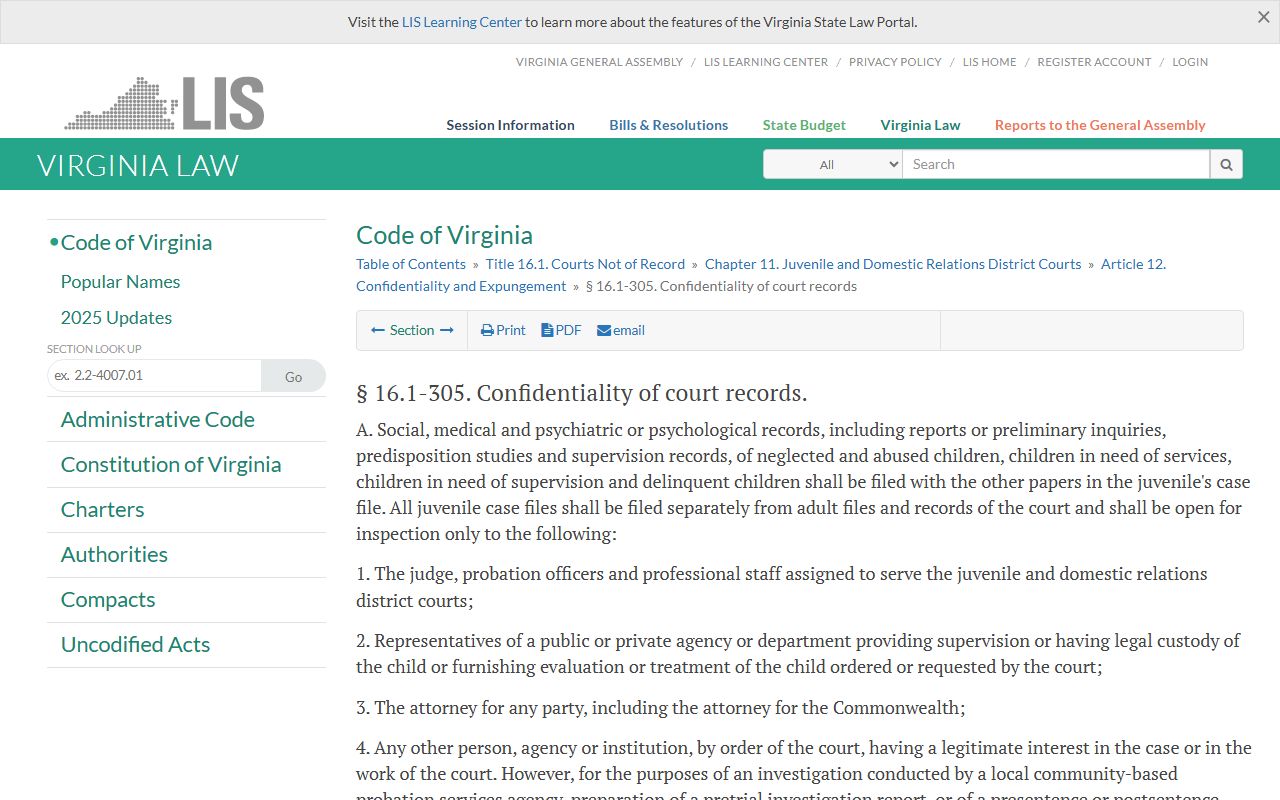
The juvenile court record statute limits access to the juvenile, parents, attorneys, court staff, and other authorized people. A separate statute covers law-enforcement records.
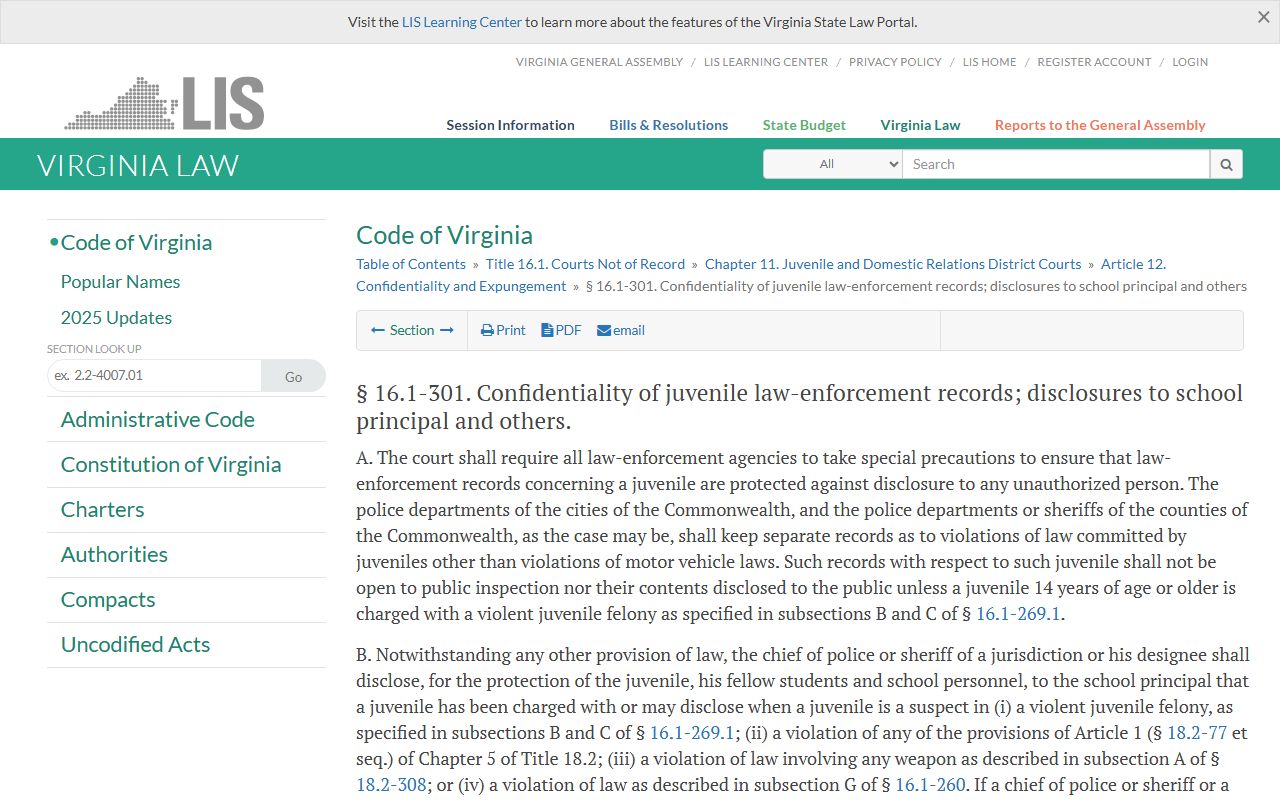
Under Code of Virginia § 16.1-301, juvenile law-enforcement records are restricted even when adult records are public. Other closed categories include adoption files, protective orders, civil commitment and mental health matters, and sealed or expunged records. Personal identifiers such as Social Security and bank account numbers are redacted.